
Field Notes
Real World Notes
- Chanterelles are meaty, funnel shaped wild mushrooms that grow in forests and have blunt ridges instead of true gills running down the stem.
- Many species smell lightly of stone fruit and are often described as having an apricot or fruity aroma when fresh.
- The Pacific golden chanterelle (Cantharellus formosus) is native to the Pacific Northwest and grows with Douglas fir, hemlock, and spruce in mossy forest soils.
- Oregon made the Pacific golden chanterelle its official state mushroom in 1999, recognizing how important it is to both forests and local cuisine.
- False chanterelles and jack o lantern mushrooms can look similar, so foragers rely on details like ridges, smell, and where they grow to stay safe.
Lore, Stories, And Encounters
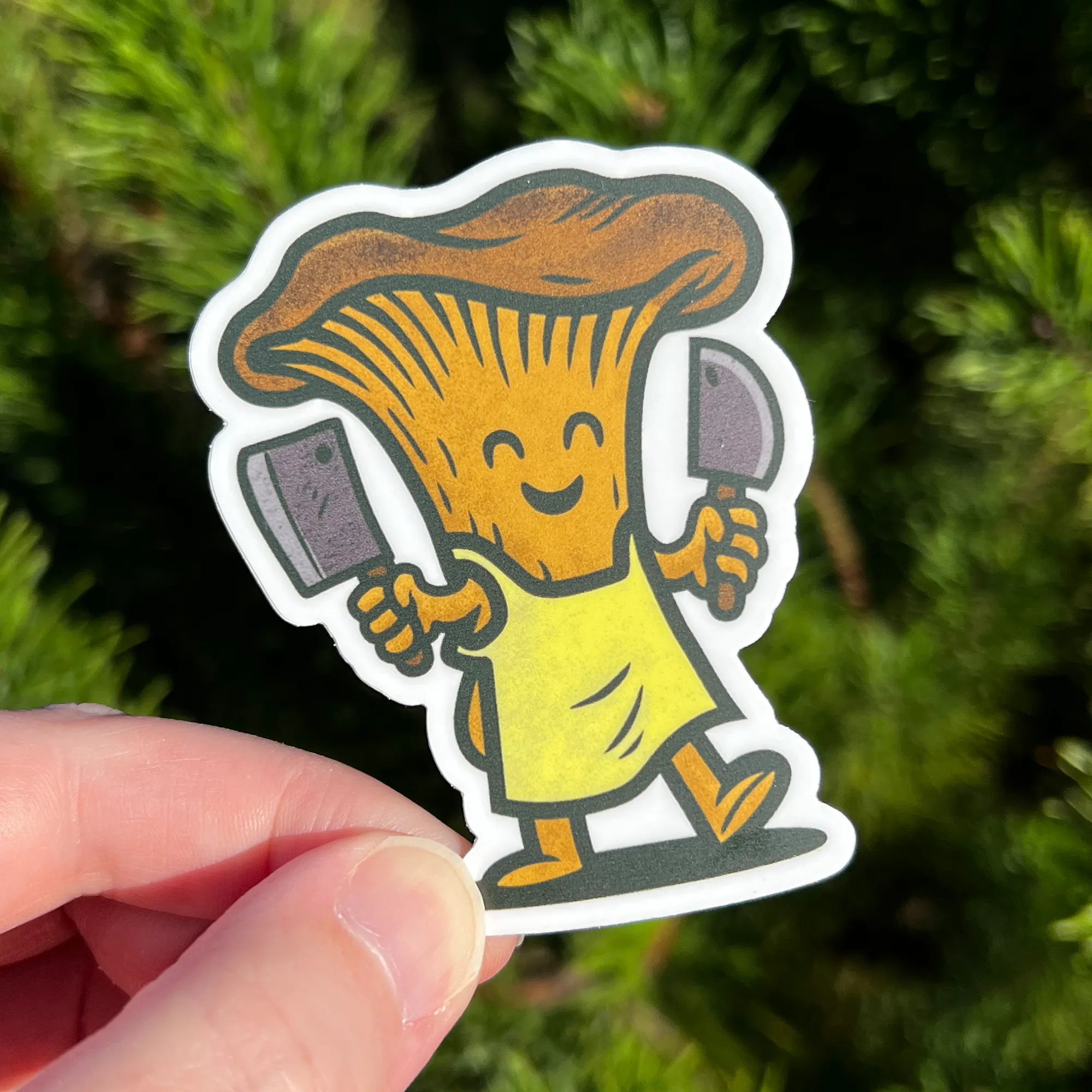
Trail cooks say that if your camp dinner turns out better than you had any right to expect, Chef Chanterelle probably walked through your pan when you were not looking. This little forest chef is said to visit mossy hillsides at dusk, taste the air, then head straight for the nearest skillet with butter in it. Some stories describe Chef Chanterelle as the spirit of the autumn harvest itself, making sure the best mushrooms end up in the hands of people who treat the forest kindly. Hunters and foragers leave a splash of cream or a knob of butter on a flat rock as a quiet thank you, hoping their next meal will pick up that same golden, nutty flavor. In our version, Chef Chanterelle is what happens when a beloved chanterelle patch gets adopted by a really enthusiastic line cook. Always smiling, always seasoning, and just a little too comfortable with a pair of heavy cleavers.
Famous cases
- Pacific golden chanterelle named state mushroom, 1999, Oregon, USA – Oregon officially recognizes the Pacific golden chanterelle as the state mushroom, highlighting its role in local forests and its value to chefs and foragers.
- Girolle on the menu, 1700s, French and European kitchens – Chanterelles, known as girolles in French, gain a reputation as a gourmet ingredient in palace and restaurant kitchens, often served with cream, meat, or eggs.
Typical encounter reports
People who say they have seen Chef Chanterelle often describe:
- Golden fans in the moss: Foragers spot bright yellow, wavy caps poking through needles and leaves near the roots of big conifers.
- Apricot on the air: A faint fruity smell drifts up when the patch is disturbed or a cap is sliced open.
- Ridges, not gills: The underside shows soft, forked ridges that run down the stem instead of sharp, separate gills.
- Chef’s favorite haul: Cooks talk about chanterelle days as the moment menus quietly shift to richer, buttery fall dishes.
If your camp stove meal suddenly smells like a five star fall dinner, maybe set out a little extra butter and thank the forest’s tiniest head chef.